Solar panels
This work addresses the optimization of the power generated by solar cells through mathematical modeling. A simplified one-dimensional model based on differential equations is proposed to describe the dynamics of electrons and holes in semiconductors. General solutions to these equations are found, as well as specific solutions applying certain boundary conditions.
The goal is to maximize the generated power, considering different variables. Using complex numerical methods such as Nelder-Mead and more simple ones such as Newton-Raphson, the conditions are optimized to achieve maximum power. The problem is simplified by reducing the number of variables, starting with five variables, then analyzing it with three, and finally reducing it to one, achieving greater precision. It highlights the importance of simplifying and reducing optimization problems to fewer variables for improved mathematical accuracy and simplicity.
Additionally, the use of the MPPT algorithm (Maximum Power Point Tracking) is proposed to dynamically adjust the voltage under more realistic changing conditions, such as temperature fluctuations.
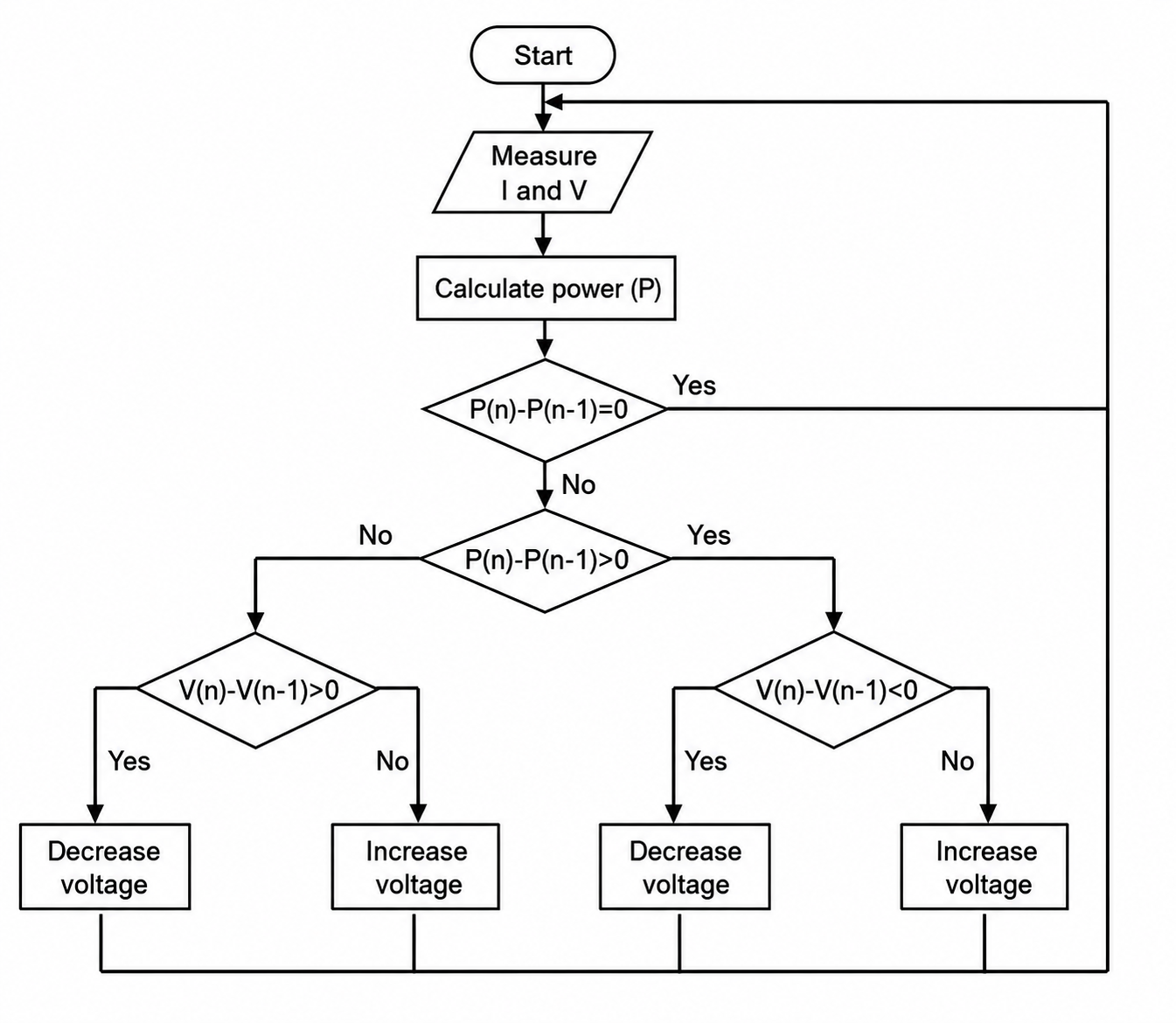
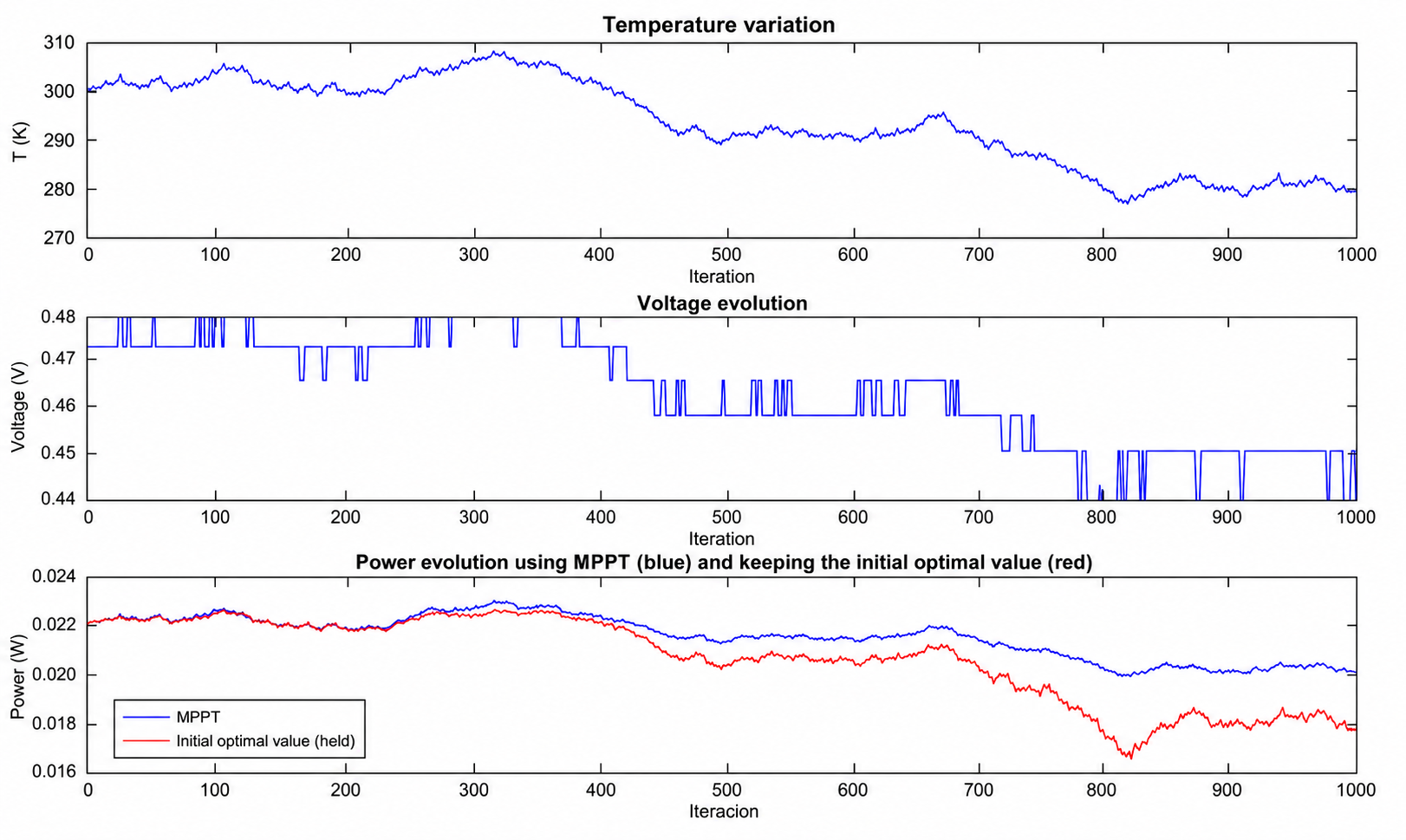
Our solution for this problem was the winner at the International Modelling Contest organised by the Complutense University of Madrid! If you want to read it completely you can find it below: